



Kyah just turned 36. According to her blood work, her body is closer to 23.
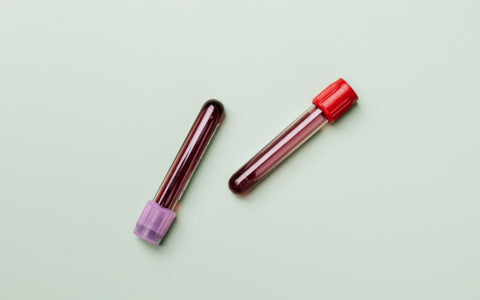
In September, our founder flew to Aro Hā, tucked into the mountains above Lake Wakatipu in New Zealand, to co-host a wellness retreat. While she was there, she got to do something we've been dying to share with you: a longevity analysis that estimates her biological age from her blood.
The result? A phenotypic biological age of 23.2. That's almost 13 years younger than the 36 candles on today's cake.
So for her birthday, we wanted to dig into the question we get asked all the time: what does gut health actually have to do with how well we age?
What is biological age, anyway?
Your chronological age is just the number of birthdays you've had. Your biological age is an estimate of how old your body is behaving.
Kyah's analysis used a well-known model called PhenoAge, developed by Dr Morgan Levine and colleagues in 2018. It combines nine routine blood markers (things like albumin, glucose, C-reactive protein, white cell count and lymphocyte percentage) with your actual age to estimate your mortality risk, then expresses that as an age in years. In a follow-up study of over 11,000 US adults, Phenotypic Age was linked to mortality even after accounting for chronological age.
A few of Kyah's numbers stood out:
- Inflammation (CRP) was below the lab's detection limit. Low-grade, background inflammation is one of the big drivers of ageing, so this is a lovely result.
- Albumin was a strong 43 g/L, a sign of good protein status and liver function.
- Her lymphocyte share sat at a healthy 38%, a sign of good immune balance.
- Glucose, kidney and red cell markers all sat comfortably in healthy ranges.
Now, one blood test on one person doesn't prove what caused it. Genetics, sleep, movement and a hundred other things play a part. But we did want to share what Kyah does every day, and what the research says about the gut's role in ageing well.
Kyah's daily gut health plan
Kyah is a busy mum of 3 who runs two companies, so her routine has to be simple enough to actually stick to. Most days it looks like this:
- GutFood every morning, for probiotics, prebiotic fibre and a big serve of plant variety
- Daily Fibre to keep things moving
- Gut Scrub her beauty secret
- Hydrate for her daily electrolytes
- A low-inflammatory diet built around whole foods and lots of plants
- A daily coffee enema, which she calls her reset
Her philosophy is simple: feed the right gut bacteria, give her body the nutrients it needs, and make sure what needs to leave doesn't hang around.
Your gut bacteria and how long you live
This is where the science gets really interesting.
In 2021, researchers at the Institute for Systems Biology analysed gut microbiome and health data from more than 9,000 people aged 18 to 101, across three separate groups. They found that in healthy people, the gut microbiome becomes more and more unique to the individual from around mid-life onwards. In a group of over 900 people aged 78 to 98, those whose microbiomes kept shifting in this way had better survival over the following four years. Those who held on to a high dominance of one common bacterial group (Bacteroides) were less likely to survive the same period. The study was published in Nature Metabolism, and the US National Institute on Aging highlighted it as a key finding.
A 2020 systematic review in the journal Nutrients pulled together 27 human studies on the gut microbiome and ageing. A few patterns kept showing up:
- Diversity tends to be higher in the oldest, healthiest people. None of the included studies found that diversity dropped with healthy ageing, and lower diversity was linked to poorer thinking and memory.
- Long-lived people tend to carry more Akkermansia and Christensenellaceae, two groups of bacteria often linked to good metabolic health.
- Butyrate producers matter. Several studies found older adults had less capacity to produce butyrate, a short-chain fatty acid that gut bacteria make from fibre and that helps nourish the cells lining the colon.
- Long-lived people still show signs of "inflammaging" (the slow creep of inflammation with age), but it appears to be balanced by anti-inflammatory responses.
The researchers are careful to note that most of this evidence is a snapshot in time, so we can't yet say the bacteria cause longer life. But the pattern is hard to ignore: a diverse, well-fed gut keeps turning up alongside healthy ageing.
Why Gut Food is Kyah's non-negotiable
If diversity is the goal, variety is how you get there. The American Gut Project, one of the largest citizen science microbiome studies ever run, found that people who ate more than 30 different plant types a week had more diverse gut microbiomes than people who ate 10 or fewer.

Thirty plants a week is a lot when you're juggling school pick-ups and two businesses. That's exactly why Kyah reaches for GutFood every morning. It's a wild-berry flavoured wholefood powder made with:
- Organic acacia gum, a gentle prebiotic fibre that feeds your good gut bugs
- Chia seed protein, papaya and organic acai
- A rainbow of fruit and vegetable powders, so every glass adds plant variety to your week
- No artificial sweeteners or refined sugar
Acacia gum has some nice research behind it. In a 2008 study published in the British Journal of Nutrition, healthy adults who took around 10 g of acacia gum a day for four weeks had significantly more Bifidobacteria and Lactobacilli, two families of beneficial bacteria, and the researchers concluded it worked at least as well as inulin. Lab studies have also shown that gut bacteria ferment acacia gum into short-chain fatty acids, including butyrate.
It mixes up a light pink, like a strawberry milkshake, which makes it a very easy habit to keep.
The longevity habit nobody talks about: going every day
Here's the one we're most passionate about. Something as simple as not going to the toilet every day may be quietly working against you.
When stool sits too long, bacteria switch fuel
A 2024 study in Cell Reports Medicine looked at more than 1,400 healthy adults and grouped them by how often they went. When stool lingers in the colon, gut bacteria run out of fibre to ferment and start fermenting protein instead. That produces by-products like p-cresol sulfate and indoxyl sulfate, which were higher in the blood of people who were constipated. Indoxyl sulfate in particular was linked to reduced kidney function. The "Goldilocks zone" for healthy, fibre-loving gut bacteria was once or twice a day.
Constipation and your brain
Research presented at the Alzheimer's Association International Conference in 2023 looked at data from more than 110,000 people across three long-running US health studies. Compared with people who went once a day, those who went every three days or more had poorer cognition, equivalent to about three extra years of cognitive ageing. They also found that people with fewer butyrate-producing bacteria tended to go less often and had worse cognitive scores. It's an observational study, so it shows a link rather than cause and effect, but it's a striking one.
Inflammation and the gut lining
Those same butyrate producers help look after the lining of your gut. When there are fewer of them, researchers believe the gut barrier may be less robust, which could let more inflammatory molecules reach the rest of the body. That's one of the ways scientists think the gut may feed into inflammaging, although this link is still being worked out.
Your heart
Straining on the toilet raises blood pressure, and researchers have suggested this may act as a trigger for cardiovascular events in vulnerable people. On a bigger scale, a study of more than 3.3 million US veterans found that people with constipation had a 12% higher risk of death from any cause, along with higher rates of coronary heart disease and ischaemic stroke, even after adjusting for other risk factors.
The takeaway isn't to panic. It's that daily regularity deserves a lot more attention than a shrug and a "that's just how I am." Fibre, water, movement and plant variety are where it starts.
Coffee enemas: Kyah's daily reset
Coffee enemas have a long history (they became popular through Dr Max Gerson's work in the 1930s), and Kyah does every single day.
For her, it's the one time in a full-on day when she has to lie down, put the phone away and do nothing else. It's a guaranteed pause between two businesses and a household. She finds it helps her feel lighter, calmer and more regular, and she treats it as part of her bigger gut health plan.

Happy birthday, Kyah
Thirty-six years old, 23 on paper, and still the first one to start a conversation about poop at a dinner party.
If there's one thing we hope you take from Kyah's results, it's that longevity isn't built in a single retreat. It's built in small, boring, daily habits: feeding your gut a wide variety of plants, getting your fibre in, staying hydrated, managing stress, and yes, going every day.
Here's to many more birthdays, and many more happy bums.
---------
Sources
- Badal VD et al. (2020). The Gut Microbiome, Aging, and Longevity: A Systematic Review. Nutrients, 12(12):3759.
- Wilmanski T et al. (2021). Gut microbiome pattern reflects healthy ageing and predicts survival in humans. Nature Metabolism, 3(2):274–286. Summarised by the National Institute on Aging and Institute for Systems Biology.
- Levine ME et al. (2018). An epigenetic biomarker of aging for lifespan and healthspan. Aging, 10(4):573–591. Liu Z et al. (2018). A new aging measure captures morbidity and mortality risk across diverse subpopulations from NHANES IV. PLOS Medicine.
- McDonald D et al. (2018). American Gut: an open platform for citizen science microbiome research. mSystems. Summary: University of Illinois.
- Calame W et al. (2008). Gum arabic establishes prebiotic functionality in healthy human volunteers in a dose-dependent manner. British Journal of Nutrition.
- Johnson-Martínez JP et al. (2024). Aberrant bowel movement frequencies coincide with increased microbe-derived blood metabolites associated with reduced organ function. Cell Reports Medicine. Summary: News-Medical.
- Ma C et al. (2023). Constipation associated with cognitive aging and decline. Alzheimer's Association International Conference. Press release.
- Sumida K et al. (2019). Constipation and risk of death and cardiovascular events. Atherosclerosis, 281:114–120.
- Ishiyama Y et al. (2019). Constipation-induced pressor effects as triggers for cardiovascular events. Journal of Clinical Hypertension.
- Son H et al. (2020). The safety and effectiveness of self-administered coffee enema: A systematic review of case reports. Medicine.



Comments (0)
There are no comments for this article. Be the first one to leave a message!